
Advanced Drone Technologies for Surveying and Mapping
- Anvita Shrivastava

- Oct 27, 2025
- 3 min read
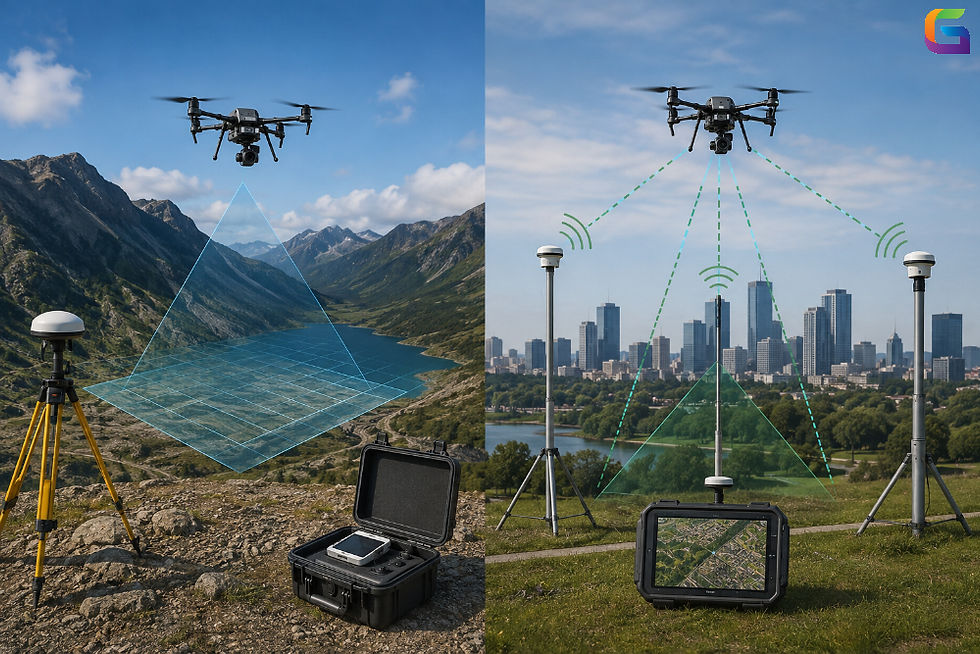
Drone technology has made a significant difference in the way industries conduct surveying and mapping in the past several years. Old-fashioned, labour-intensive methods relied on either measuring things in person and/or using aerial photos, though drones have revolutionised the process to permit precision mapping without ever leaving the ground and with entirely more efficient outcomes.

Drones are modernising surveying and mapping.
Old-fashioned surveying and mapping methods can take a lot of time, they can take a lot of effort, and human error is always a factor. Drones are outfitted with a multitude of sensors and cameras that produce high-resolution data in a much faster manner. This certainly applies to:
Monitoring construction sites
Analysing agricultural fields
Assessing environmental sites and forests
Urban mapping to track hotspots and monitor infrastructure.
Drones utilise GPS technology and LiDAR sensors through photogrammetry to give survey-accurate data while keeping operational costs much lower.
Crucial Advanced Drone Technologies
LiDAR (Light Detection and Ranging)
Drones equipped with LiDAR utilise laser pulses to determine the distance to the ground beneath them and produce highly precise 3D point clouds. LiDAR is highly effective in heavily forested areas or areas of challenging terrain where photogrammetry may not produce ideal results.
Applications:
Canopy evaluation in forests
Mapping floodplains
Surveys in mining and quarries
Photogrammetry
Photogrammetry is the process of taking overlapping images from a drone and utilising software to create detailed 2D maps or 3D models. This approach has a lower cost and highly accurate readings and is a great tool for urban planning and construction monitoring.
Applications:
Infrastructure inspection
Land parcel mapping
Heritage site documentation
Multispectral and Hyperspectral Imaging
Drones equipped with multispectral sensors. Multispectral sensors capture data beyond visible light, allowing analysis of vegetation health, water quality, and soil conditions. Other remote sensing imaging techniques, referred to as hyperspectral imaging, go even further to collect hundreds of spectral bands to analyse and identify materials in detail.
Applications:
Precision agriculture
Environmental monitoring
Resource exploration
Data Processing with AI
Modern-day drones use artificial intelligence and machine learning to process the data they collect faster and more accurately. AI algorithms can automatically detect features of the land, calculate volumes, and even estimate changes over time.
Applications:
Automated monitoring of construction sites
Disaster assessment
Planning for urban development.
Benefits of Using Drones for Surveying and Mapping
Efficiency: Survey vast areas within hours instead of days.
Cost: Save costs by reducing manpower and heavy equipment.
Precision: Achieve centimetre accuracy using lidar and GPS.
Safety: Survey hazardous locations without exposure to personnel.
Timeliness: Generate maps and models rapidly for decision-making.
Future Trends in Drone Surveying and Mapping
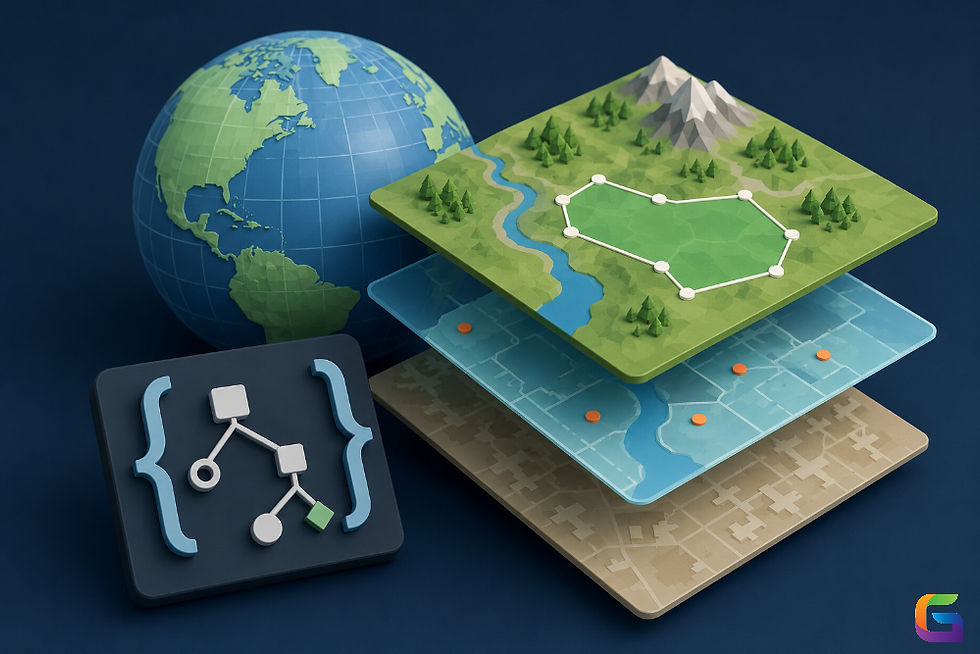
The future of drones consists of affinity for autonomous operations, drone swarms, and real-time cloud-based mapping. Real-time mapping will improve data collection even further by integrating with GIS and many IoT sensors to allow geospatial insights to be smarter, faster, and actionable.
As more industries adopt drones, the focus will continue to shift from capturing data to intelligent analysis and predictive modelling. To ensure that all drones will become an essential part of modern gatherings' workflow.
Advanced drone technology is not just an add-on; it is a must for modern surveying and mapping. From lidar to AI-based analytics, drones provide more accuracy, time savings, and safety to allow professionals to make smarter decisions in shorter timeframes.
For more information or any questions regarding surveying and mapping, please don't hesitate to contact us at:
Email: info@geowgs84.com
USA (HQ): (720) 702–4849

Comments